
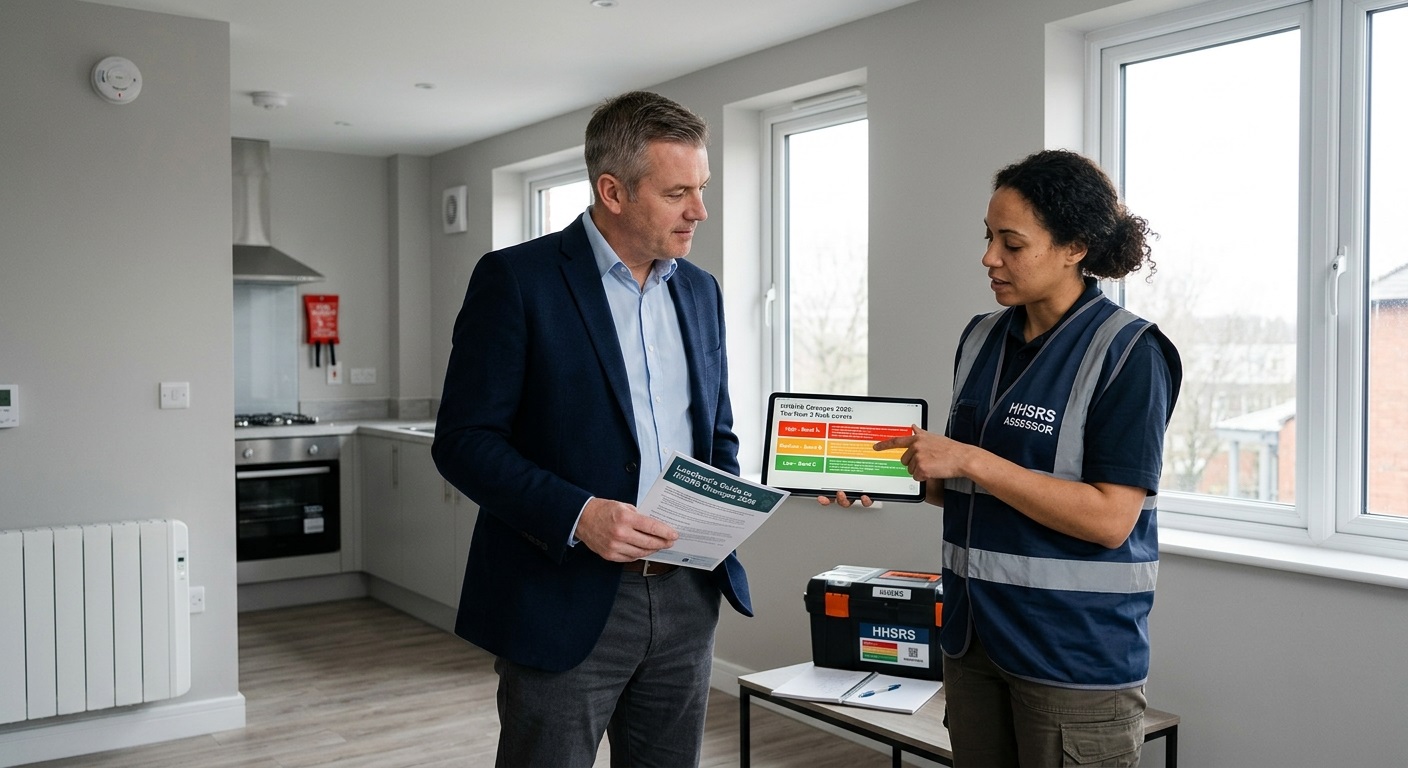
New changes to the Housing Health and Safety Rating System (HHSRS) are now in force in England — and landlords need to understand what they mean for their properties.
The Housing Health and Safety Rating System (HHSRS) is the framework used by local authorities to assess whether residential properties present risks to the health and safety of occupants. The highly anticipated HHSRS Changes 2026 came into effect on 23 June 2026, introducing a more intuitive, modernized approach to assessing and classifying housing risks.
For landlords, the key message is simple: keeping your property safe, well maintained and compliant remains essential.
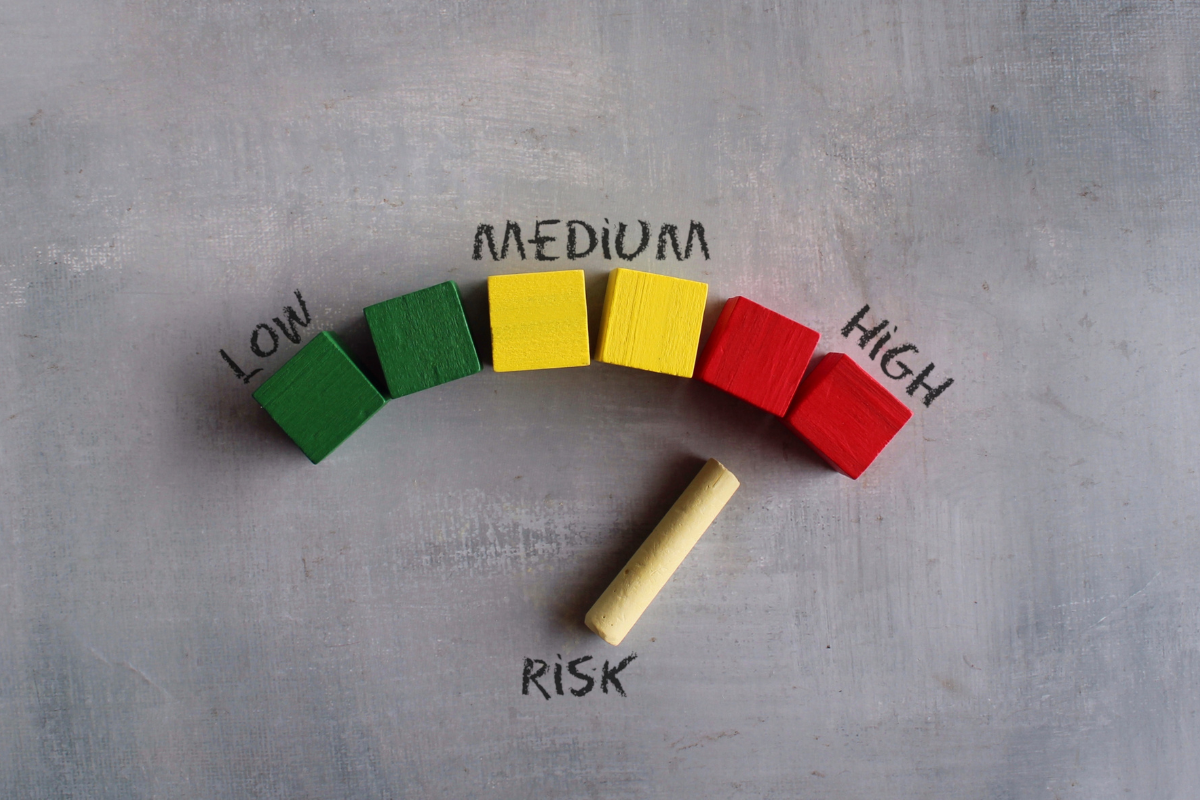
Streamlined Risk Levels: High, Medium, and Low
One of the most significant HHSRS Changes 2026 is the introduction of a clearer way to categorize housing hazards.
Previously, hazards were assessed across 10 bands, from A to J. These have now been replaced with three clearer risk levels:
· High – broadly equivalent to a Category 1 hazard
· Medium – a Category 2 hazard
· Low – also a Category 2 hazard
The new system is intended to make assessments easier to understand while continuing to cover significant risks to tenants and other occupants.
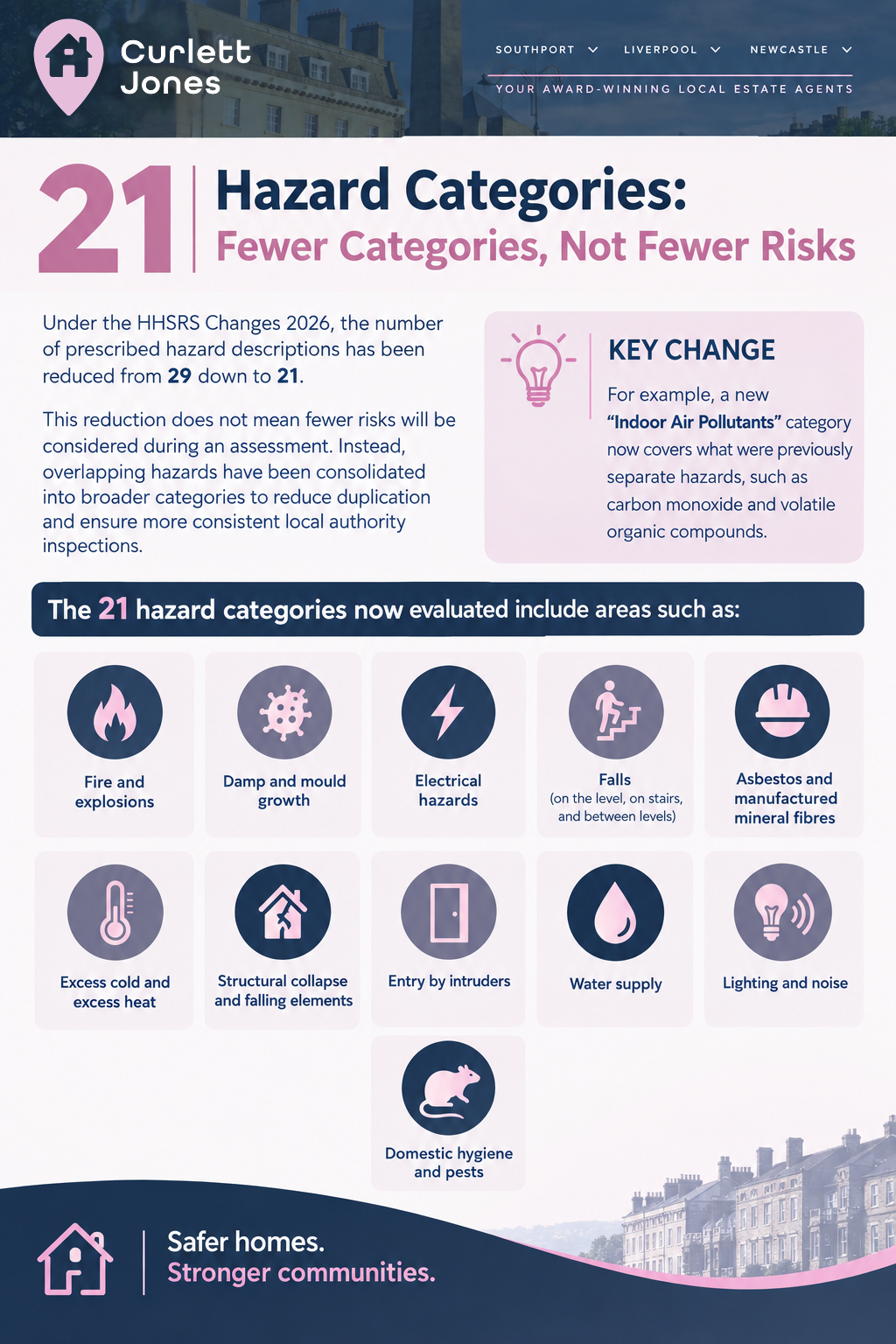
21 Hazard Categories: Fewer Categories, Not Fewer Risks
Under the HHSRS Changes 2026, the number of prescribed hazard descriptions has been reduced from 29 down to 21.
This reduction does not mean fewer risks will be considered during an assessment.
Instead, related hazards have been grouped into broader categories to reduce duplication and make inspections more consistent.
The 21 hazard categories include areas such as:
· Fire and explosions
· Damp and mould growth
· Electricity
· Falls
· Asbestos
· Excess cold and heat
· Structural collapse and falling elements
· Intruders
· Water supply
· Lighting and obstructed views
· Noise
· Domestic and personal hygiene
Welcome to Curlett Jones Estates
Expanded Fire Safety Definitions
The updated regulations also broaden the definition of fire hazards.
Assessments can now take into account risks associated with smoke and fumes, explosions and structural collapse caused by fire or explosion, alongside the traditional assessment of uncontrolled fire.
For landlords and agents, this reinforces the importance of taking a comprehensive approach to fire safety — including the condition and maintenance of the property, detection systems, escape routes, electrical and gas installations and structural integrity.
Enforcement and Landlord Responsibilities

While the HHSRS Changes 2026 provide a much clearer framework for hazard assessment, the burden of responsibility to maintain a safe property remains strictly on the landlord.
Local authorities can inspect residential properties and, where appropriate, take enforcement action. For High-risk hazards, corresponding to Category 1 hazards, councils have a duty to take enforcement action. Lower-risk hazards remain subject to the council’s discretion.
Enforcement options can include improvement notices, prohibition orders and other formal measures. Councils can also impose a civil penalty of up to £7,000 for Category 1 hazards.
This is why keeping on top of property maintenance, inspections and compliance should be an ongoing part of responsible property management — rather than something addressed only when an issue arises.

Why We Use Independent Property Inspections
At Curlett Jones Estates, we believe that property inspections should be thorough, consistent and professional. That’s why we use an independent third-party inspection service for our managed properties.
Using a specialist external provider gives every property an objective and consistent inspection, helping to ensure that potential issues are identified and reported clearly, regardless of the property or circumstances.
This approach also provides an additional layer of protection for our landlords. Independent inspection reports create a clear record of the property’s condition and any recommendations for action, helping our team identify and address issues promptly while maintaining high standards across every property we manage.
For our fully managed landlords, it means having the reassurance that their property is being inspected professionally and consistently, while our team remains responsible for managing any follow-up work to ensure ongoing compliance with the HHSRS Changes 2026.
How Curlett Jones Can Help?
For landlords who choose fully managed property management, our role is to help take the pressure out of managing a rental property.
From navigating the HHSRS Changes 2026 and keeping track of shifting compliance requirements to arranging trusted maintenance contractors and responding to issues, our team works proactively to help ensure properties are properly looked after.

Good property management is about staying ahead of problems, not simply reacting when they occur.
If you’re currently self-managing your property and are concerned about keeping up with changing regulations and your responsibilities as a landlord, our team can help.
Want to Find Out More?
If you’d like to discuss fully managed property management with our team, get in touch with Curlett Jones Estates today.